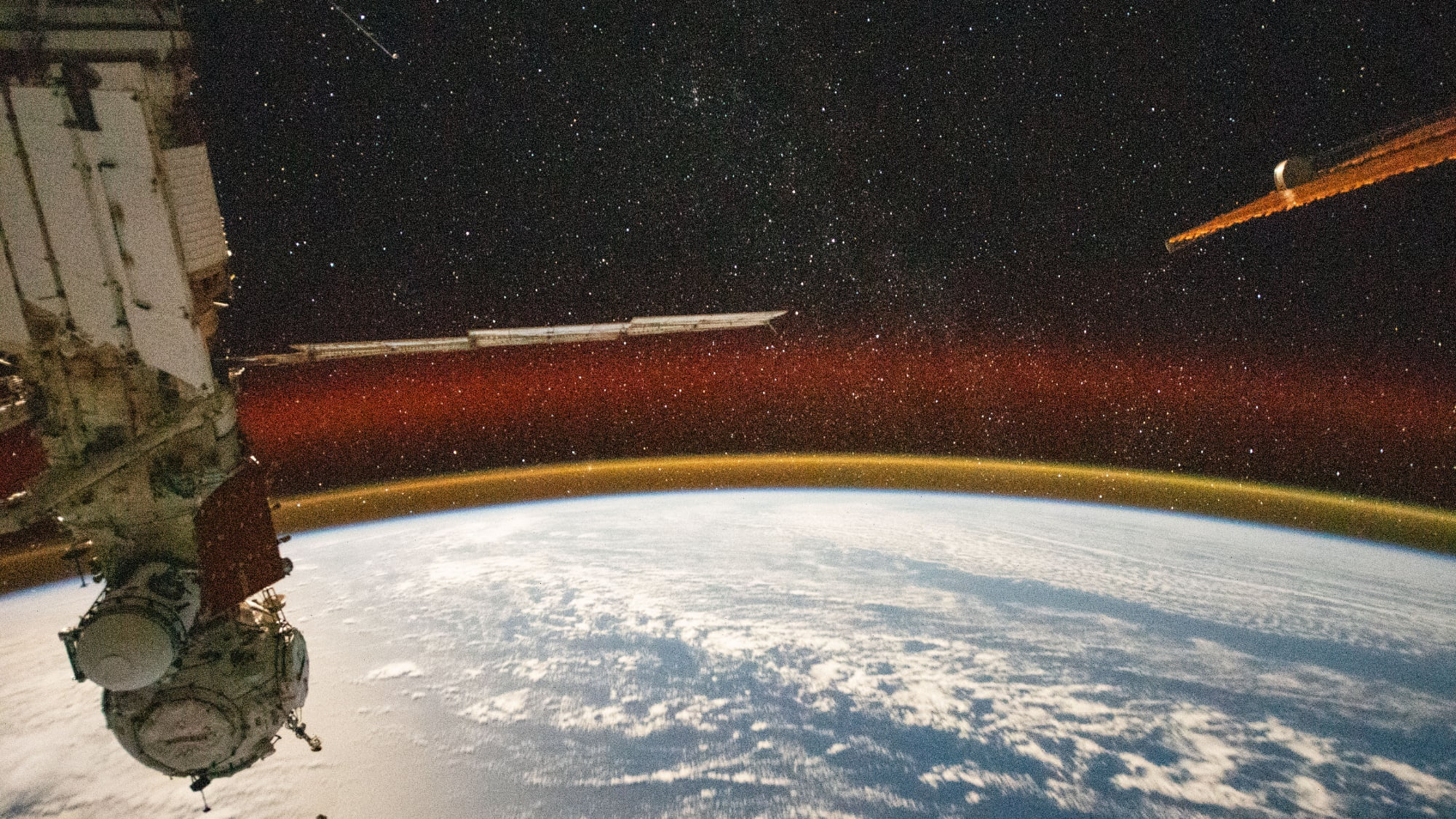
When astronauts return from extended stays on the International Space Station, they often experience a constellation of health challenges: muscle atrophy, bone density loss, immune system changes, and elevated markers of oxidative stress. For decades, NASA has studied these effects to protect the health of space travelers — but the implications extend far beyond the astronaut corps.
The Space-Earth Connection
In microgravity, astronauts are completely disconnected from the Earth's electrical field. They're also exposed to elevated levels of cosmic radiation and confined to an artificial electromagnetic environment. NASA-funded research through the Translational Research Institute for Space Health (TRISH) has explored how these conditions affect oxidative balance at the cellular level.
What researchers have observed is that the space environment is associated with accelerated oxidative stress — the same fundamental challenge that affects people on Earth, albeit in a dramatically amplified form. The mechanisms being studied in space — electron balance, free radical management, and cellular protection — have direct parallels to the challenges faced by active people in daily life.
In microgravity, astronauts are completely disconnected from the Earth's electrical field and exposed to elevated radiation — creating an accelerated model of the oxidative stress that affects all of us on Earth.
Why This Matters on the Ground
You don't need to travel to space to experience oxidative stress. Intense physical training, environmental pollutants, chronic psychological stress, and electromagnetic exposure from everyday devices all contribute to the body's oxidative load. What space research has highlighted is just how fundamental the body's electrical and oxidative balance is to overall health and resilience.
NASA astronaut Nicole Stott, who spent 104 days aboard the ISS during Expeditions 20 and 21, has spoken about the importance of understanding these connections between space health research and terrestrial wellness applications. Her perspective bridges the gap between cutting-edge space science and practical everyday health.
Technology Transfer: From NASA Labs to Daily Life
Throughout its history, NASA has been a remarkable engine of technology transfer. Memory foam, water filtration systems, scratch-resistant lenses, and countless other innovations originated in space research before finding everyday applications. The research into oxidative stress management and bioelectronic approaches represents another potential pathway from space science to consumer wellness technology.
At Grounded Ventures, we're inspired by this tradition. OxSHIELD draws on insights from space health research — the same fundamental science of electron balance and oxidative stress that NASA studies in astronauts — and applies it to a wearable system designed for life on Earth. Whether you're a competitive athlete, an active professional, or someone who simply wants to explore emerging wellness approaches, the science that protects astronauts may have something to offer you.