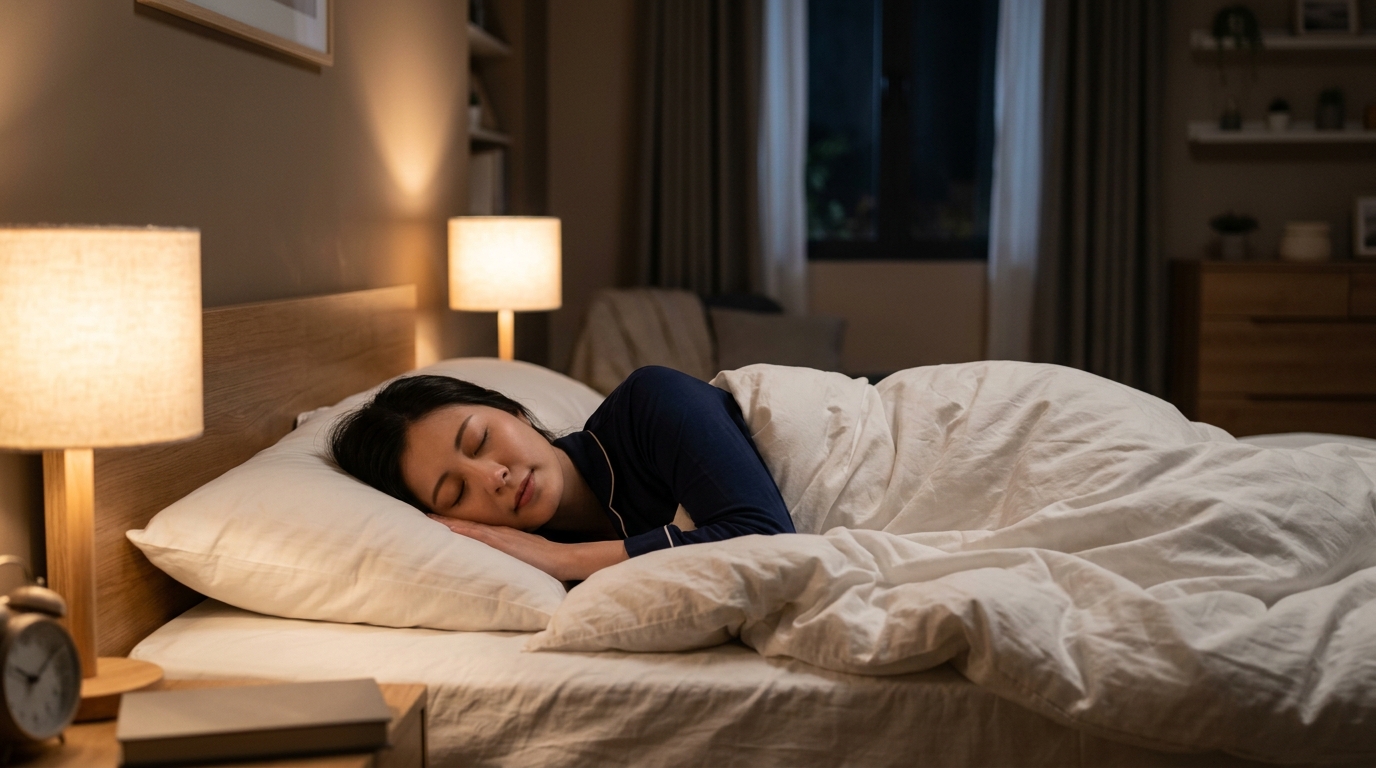
Ask any athletic trainer, coach, or sports medicine professional about the most important factor in recovery, and you'll hear the same answer: sleep. It's during deep sleep that the body performs its most critical repair work — rebuilding muscle tissue, consolidating training adaptations, and clearing metabolic waste from the brain.
The Sleep-Recovery Relationship
Research consistently shows that sleep quality directly impacts physical performance, cognitive function, and immune resilience. A study from Stanford University found that college basketball players who extended their sleep showed measurable improvements in sprint times, reaction time, and shooting accuracy.
Yet despite knowing how crucial sleep is, many people — athletes included — struggle with sleep quality. Factors like travel schedules, screen time, stress, and environmental disruptions all contribute to suboptimal rest.
Sleep is when the body performs its most critical repair work — rebuilding muscle tissue, consolidating training adaptations, and clearing metabolic waste. Quality matters as much as quantity.
What Grounding Research Has Explored
Several peer-reviewed studies have investigated the relationship between earthing and sleep. A notable study published in the Journal of Alternative and Complementary Medicine (Ghaly & Teplitz, 2004) examined cortisol profiles in participants who slept grounded versus ungrounded. The researchers observed that grounded sleepers showed changes in their diurnal cortisol patterns, with levels that more closely aligned with the body's natural circadian rhythm.
Participants in the grounded group also self-reported improvements in sleep quality, including falling asleep faster and experiencing fewer nighttime awakenings. While self-reported data has inherent limitations, these observations have been consistent across multiple small-scale studies.
The Cortisol Connection
Cortisol — often called the "stress hormone" — follows a natural daily rhythm: higher in the morning to promote wakefulness and gradually declining through the evening to facilitate sleep. When this rhythm is disrupted — by chronic stress, jet lag, or irregular schedules — sleep quality may suffer.
The grounding research suggests that earthing may be associated with a normalization of this cortisol pattern, potentially supporting the body's natural transition between wakefulness and rest.
Grounded sleepers in the Ghaly & Teplitz study reported falling asleep faster and experiencing fewer nighttime awakenings — observations consistent across multiple small-scale studies.
Practical Implications
For athletes, active professionals, and busy parents alike, anything that may support better sleep quality is worth exploring. Whether it's a yoga instructor winding down after evening classes, a soccer player recovering between matches, or a working parent trying to maximize limited rest time — sleep is the foundation that everything else is built upon.
This is one reason why wearable approaches to grounding technology are generating interest: the possibility of supporting the body's electrical balance not just during specific activities, but throughout the night as well.